Product Boundary
Mastercam provides the third-party CAD/CAM environment referenced in these examples.
FeatureOrder Atlas independently publishes machining-sequence cases about feature dependency, access, reference surfaces, and setup order.
The site does not generate production toolpaths, post NC code, configure machines, provide feeds and speeds, or replace shop-specific process planning.
CAD/CAM Environment
Mastercam provides the CAD/CAM software framework utilized for toolpath generation, simulation, and post-processor output. All trademark rights remain with their respective owners.
Atlas Methodology
FeatureOrder Atlas develops reproducible case logic covering tool clearance, datum surface stability, feature accessibility, and fixturing transitions across complex multi-axis parts.
Practical Application
Engineers apply these comparative sequence models directly inside CAM software to prevent tool deflection, reduce cycle air time, and avoid unverified repositioning hazards.
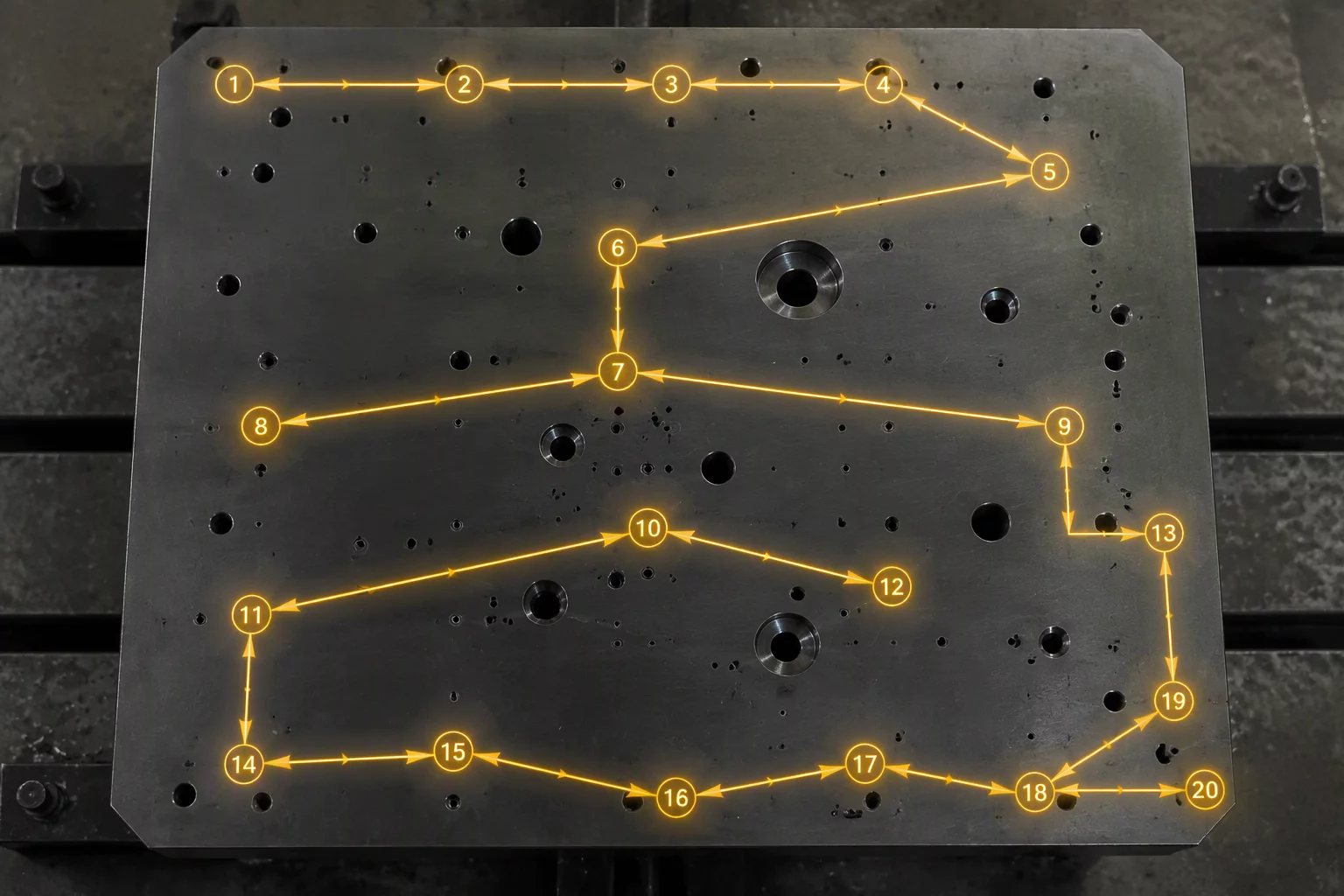
One Part, Multiple Hole Groups
Explore the six critical phases of resolving overlapping hole diameters, threaded depths, and reference datum planes in prismatic parts.
Solid Model Geometry & Datum Preparation
Importing and conditioning parasolid components requires isolating reference datums, checking wall thicknesses around deep bore clusters, and establishing the primary WCS before any cutter paths are initiated.
- Category
- Manufacturing process planning
- Subcategory
- Feature sequencing
- Content format
- Feature Order Maps
- Brand role
- CAM feature/programming context
- Search intent
- Mastercam hole workflow / machining feature sequence / CAM process planning
Why Sequence Order Matters Across Setups
Toolpaths that ignore geometric precedence risk part deformation, drill walking on unmachined cast faces, and unnecessary re-clamping operations.
Face Finishing Before Spotting
Spot drills wander if applied to sloped or rough sawn stock. Always complete primary top face milling to ensure true perpendicular center-points.
Grouping Common Diameters
Interleaving spot drilling, rough drilling, and tapping for individual holes adds redundant spindle orientation and carousel swap cycles.
Cross-Hole Intersection Care
Drilling through previously cut voids leads to catastrophic cutter deflection. Mastercam feed rate reduction or counterbore priority solves this boundary issue.