 Reference Architecture
Sequence B: Depth-Stratified Feature Order Map
An in-depth reference methodology for CNC programmers. When parts feature multi-tiered steps, pockets, and holes across multiple Z-planes, sorting operations by absolute depth preserves stock rigidity for heavy roughing while preventing deep-pocket tool interference downstream.
Request Sequence Blueprint & CAD Dataset
Depth-First Sorting Logic
A deterministic sequencing approach where cutting operations across disparate features are batched by Z-elevation levels rather than completed feature-by-feature.
Maximum Rigidity Preservation
Machining upper planes first retains maximum workpiece cross-section, reducing chatter, tool deflection, and thin-wall vibration on deeper passes.
Multi-Tier CNC Programmers
Built for production machinists handling manifold blocks, structural aerospace ribs, and deep-pocket tooling where wall deflection ruins tolerances.
Need Custom Sequence Optimization for Complex Castings?
Compare depth-first grouping against tool-first strategies with our manufacturing analysis engineers.
Why Grouping by Depth Dictates Machining Stability
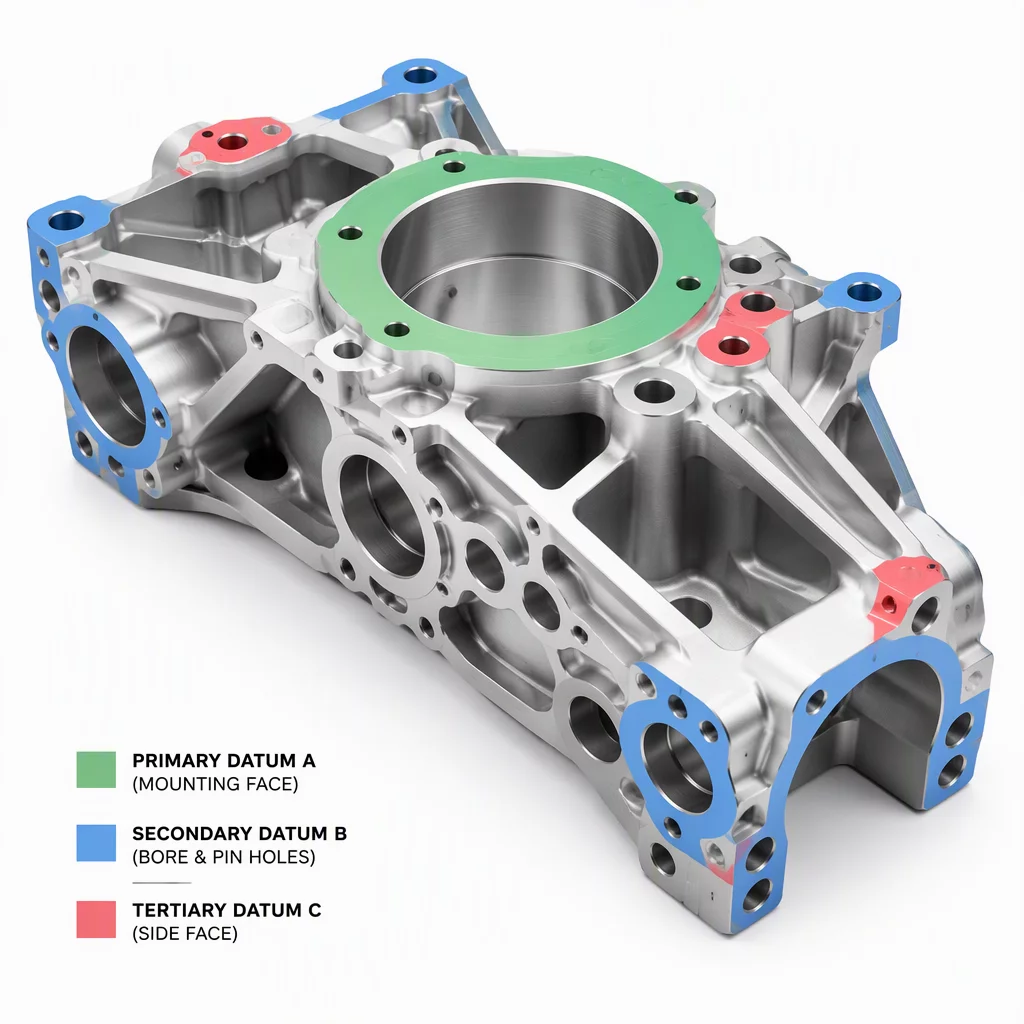
When programming complex components with multiple stepped pockets, boss faces, and internal hole patterns, programmers frequently fall into the trap of finishing an entire pocket or feature before roughing adjacent areas. In Sequence B, operations are strictly stratified by depth: all shallow preliminary roughing occurs across every feature before intermediate or deep cavity clearing begins. This approach prevents thin unsupported wall sections from being subjected to aggressive cutting forces later in the program, ensuring acoustic dampening and high dimensional accuracy.
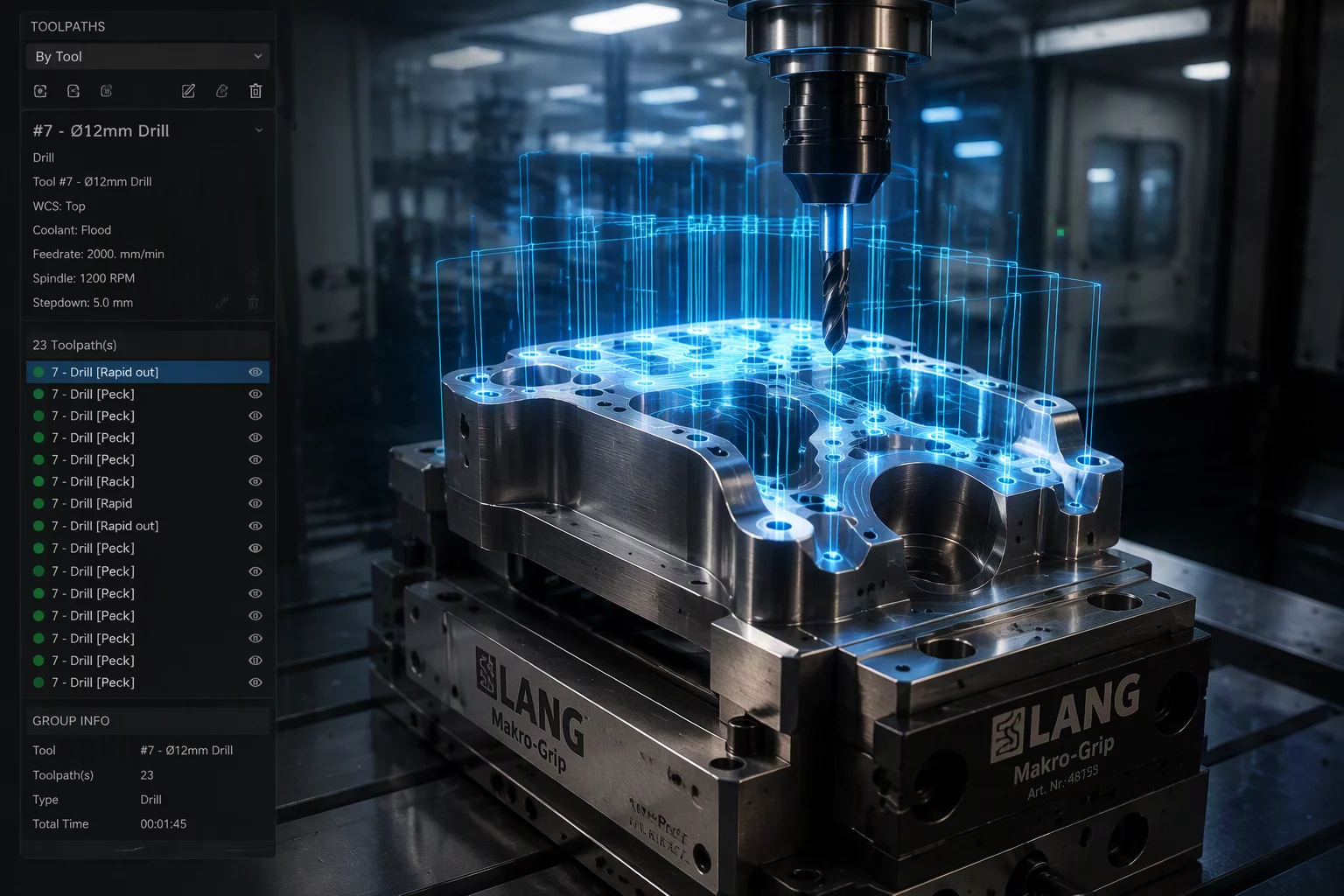
Furthermore, depth-grouped sequencing dramatically reduces clearance plane violations in 3-axis and 3+2 axis machining. By stepping down uniformly through the billet, subsequent tools approach from an already cleared ceiling, allowing shorter toolholder gauge lengths and far stiffer tool assemblies. In Mastercam 2026, pairing depth stratification with GPU-accelerated collision checking allows CNC programmers to confirm that deep reaching slender end mills only engage where outer bosses have already been surfaced.
Standard Implementation Rules
- Rule 1: Surface top reference planes and shallowest datum features before initiating deep cavity roughing.
- Rule 2: Execute all high-energy volumetric stock removal at Z-depth N before dropping to Z-depth N+1.
- Rule 3: Delay finishing passes on deep thin vertical ribs until adjacent pocket floors provide clamping backing.
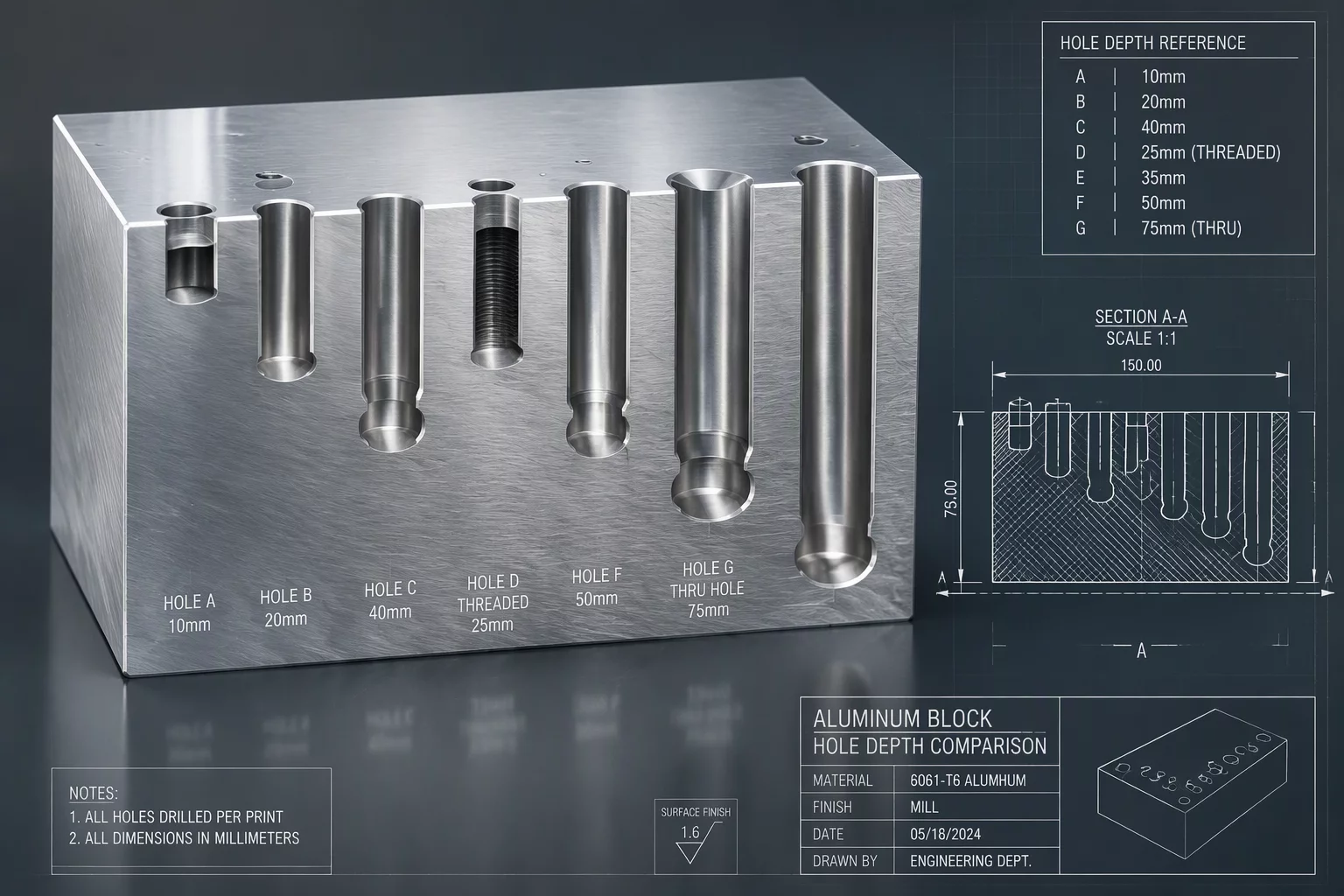
- Rule 4: Match spot drilling and initial counterboring to the pre-roughed floor elevation to avoid pecking through air.
Technical Specifications & Process Constraints
Systematic parameters applied when configuring depth-prioritized toolpath trees in Mastercam and ISO standard CNC controllers.
| Parameter | Engineering Value | CAM Rule Context |
|---|---|---|
| Primary Sorting Vector | Absolute Z-Coordinate (Highest to Lowest) | Tool changes are subordinate to minimum remaining stock stiffness criteria. |
| Tool Deflection Risk | Reduced by up to 64% | Shorter cutter overhang utilized until lower Z-depths strictly require extended reach. |
| Cycle Time Tradeoff | +8% to +14% Tool Changes | Offset by 2.5x tool life extension and elimination of chatter-induced rework. |
| Simulation Validation | GPU-Accelerated Dynamic Stock Verification | Mastercam 2026 stock models update instantly at each depth boundary for reliable clearance. |
Setup Considerations & Best Practices
Analyze Wall Thickness and Floor Flex
Examine the part geometry for thin diaphragms or web floors. Always maintain maximum parent material beneath the cut zone until upper pocket perimeters are completely roughed and stabilized.
Balance Tool Change Frequency Against Rigidity
While grouping by depth can increase automated tool change count, cluster identical diameter roughers within the same depth band to maintain rapid production cadence without sacrificing stiffness.
Related Feature Order Strategies