 Verified Mastercam Logic
Downstream Dependency Resolution Architecture
When deep pockets alter tool reach or roughing removes clamping bosses, subsequent operations face unexpected physical interferences. This operational guide provides deterministic rules to sequence upstream roughing and downstream finishing without breaking coordinate datum chains.
Request Full Sequence Implementation File
Dependency Hierarchy Tree
A structured topological framework that ensures reference surfaces, locator bores, and clearance envelopes are cut and verified before child operations engage.
Dynamic Stock Preservation
Eliminates air cutting and tool overload by tracking in-process stock variations across complex 3D pockets, cross-drilled holes, and multi-sided setups.
Precision CNC Programmers
Crafted for CAM specialists dealing with aerospace brackets, hydraulic valve manifolds, and thin-wall structural parts where setup drift causes immediate scrap.
Encountering sequence clashes in complex toolpaths?
Submit part geometric constraints to our manufacturing engineering team for a comprehensive sequence dependency audit.
Resolving Cascading Dependency Conflicts Across Machining Trees
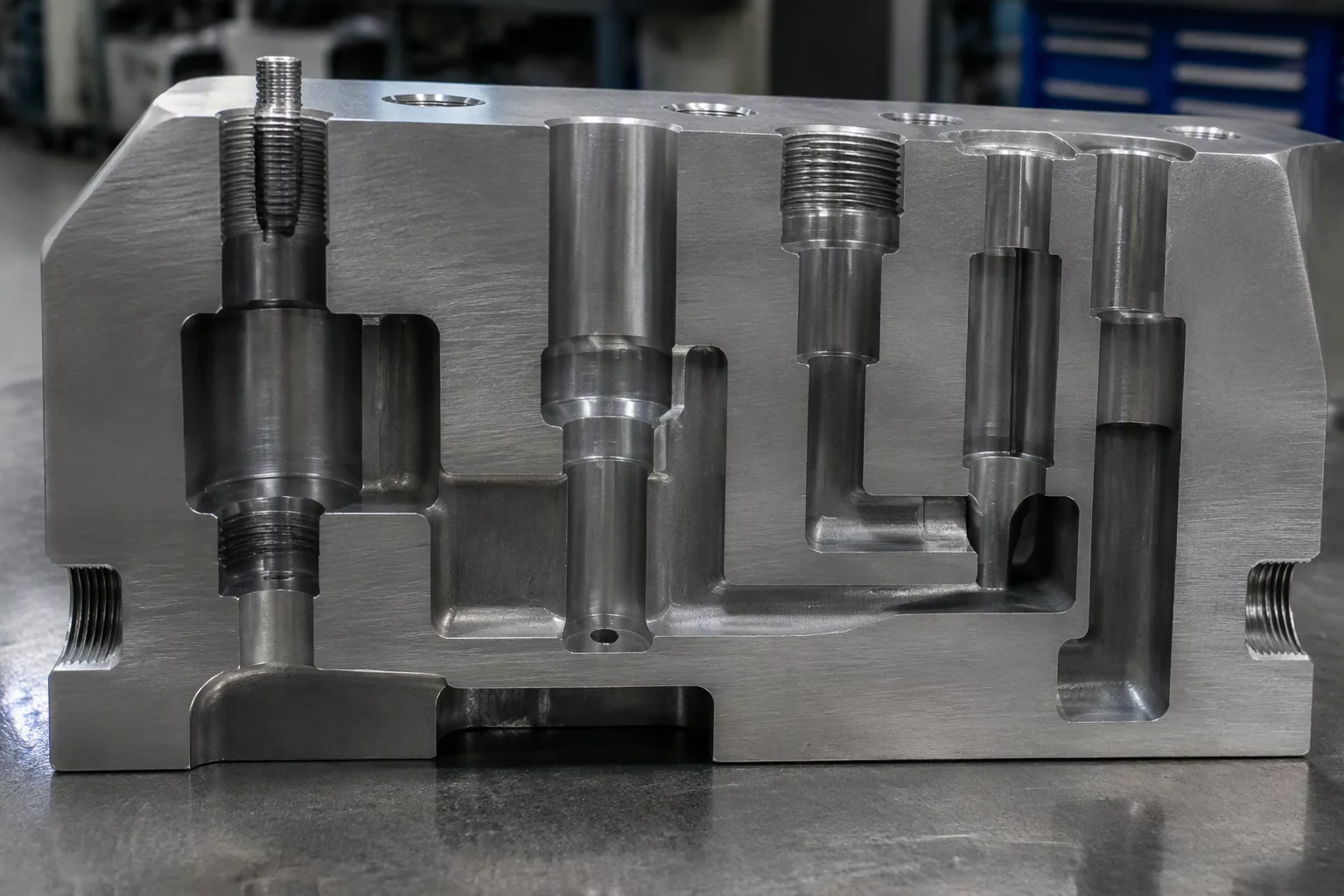
Every cutting operation alters the geometric boundary and structural rigidity of the workpiece for every subsequent tool. When programmers group operations solely by tool diameter to reduce tool change counts, they introduce hidden risks into the process plan. A deep pocket cleared before cross-drilling an intersecting fluid port eliminates the solid backing needed to suppress drill deflection. Conversely, drilling the cross port first creates breakthrough burrs inside the deep cavity that can chip ceramic or solid-carbide finish end mills. Resolving these cascading dependencies demands an analytical approach where each feature's parent-child relationship is explicitly verified before posting NC code.
Modern GPU-accelerated simulation in Mastercam 2026 allows instant recalculation of in-process stock models after each roughing tier. Programmers no longer have to guess how much stock surrounds a boss or whether a toolholder collar has sufficient axial clearance. By isolating primary datums, intermediate roughing boundaries, and final finishing cycles into deterministic dependency tiers, high-value components can be machined with absolute dimensional repeatability and zero unexpected gouges.
Blueprint Protocol Inclusions
- Structured Operation Tree templates organized by geometric dependency tiers
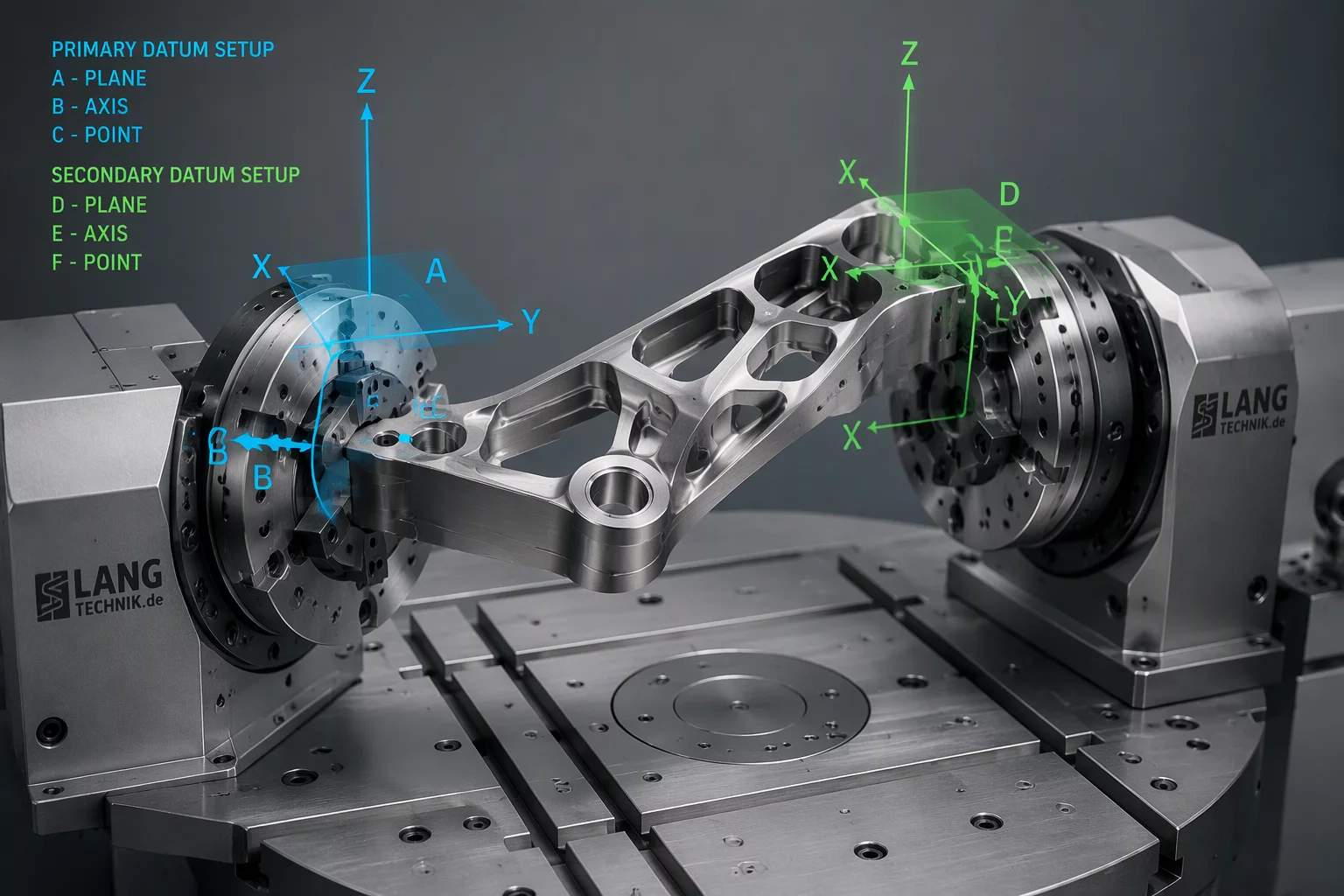
- Datum verification checklists ensuring finished surfaces lock prior to secondary indexing
- GPU-accelerated stock model parameters to identify shank and holder clearance violations
- Intersecting hole and deep pocket deburring sequence matrices for high-pressure applications
Engineering Specifications & Sequencing Rules
Standardized parameters used across multi-axis milling operations to enforce deterministic downstream feature relationships.
| Parameter | Engineering Value | CAM Rule Context |
|---|---|---|
| Primary Datum Priority | Face Milled Surface A | Reference surfaces must reach final tolerance before secondary bores are machined. |
| Stock Envelope Tracking | GPU Dynamic Mesh | Continuously updates residual stock boundaries to prevent entry shocks during plunge moves. |
| Intersecting Hole Sequence | Large Bore Before Cross Drill | Avoids tool wander and drill wandering when penetrating uneven internal cavity walls. |
| Residual Wall Margin | > 1.25 x Web Thickness | Maintains structural resistance against deflection while finishing opposing deep pocket cavities. |
Step-by-Step Resolution Workflow
Trace Geometrical Parent Links
Identify all features whose position tolerances or clearance pathways rely on an existing planar face, bore centerline, or finished relief pocket.
Isolate Setup Residual Stock
Execute full GPU stock verification after bulk roughing stages to guarantee that downstream toolholders maintain verified clearance from untouched raw walls.
Related Feature Order Maps