 Verified Process
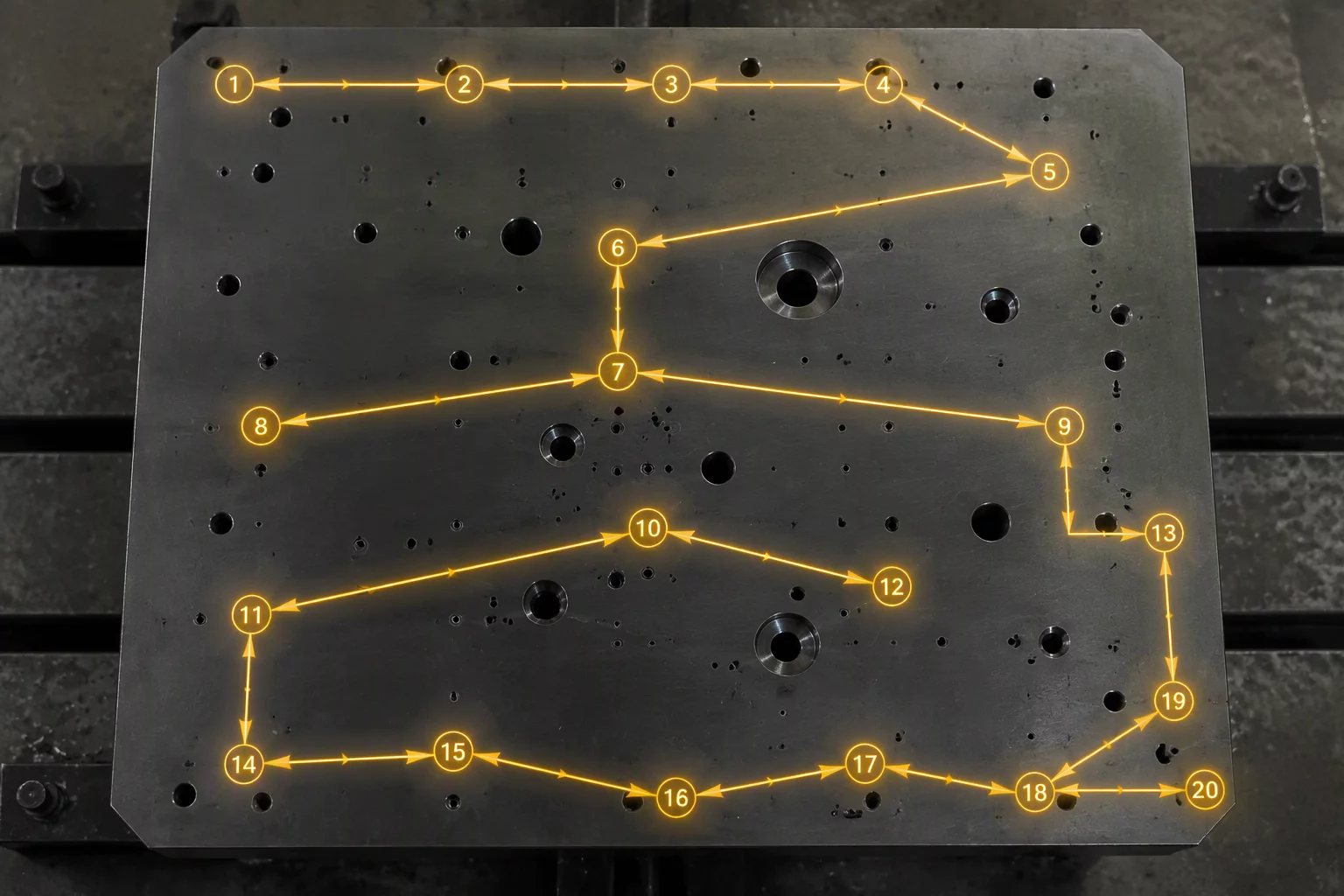
Hole Sequence Reference Strategy Blueprint
Datum stability requires drilling primary locating features prior to stress-relieving pockets. This strategy organizes hole sequencing rules to protect physical coordinate references against deflection and thermal expansion.
Request Full Strategy Documentation
Deterministic Datum Allocation
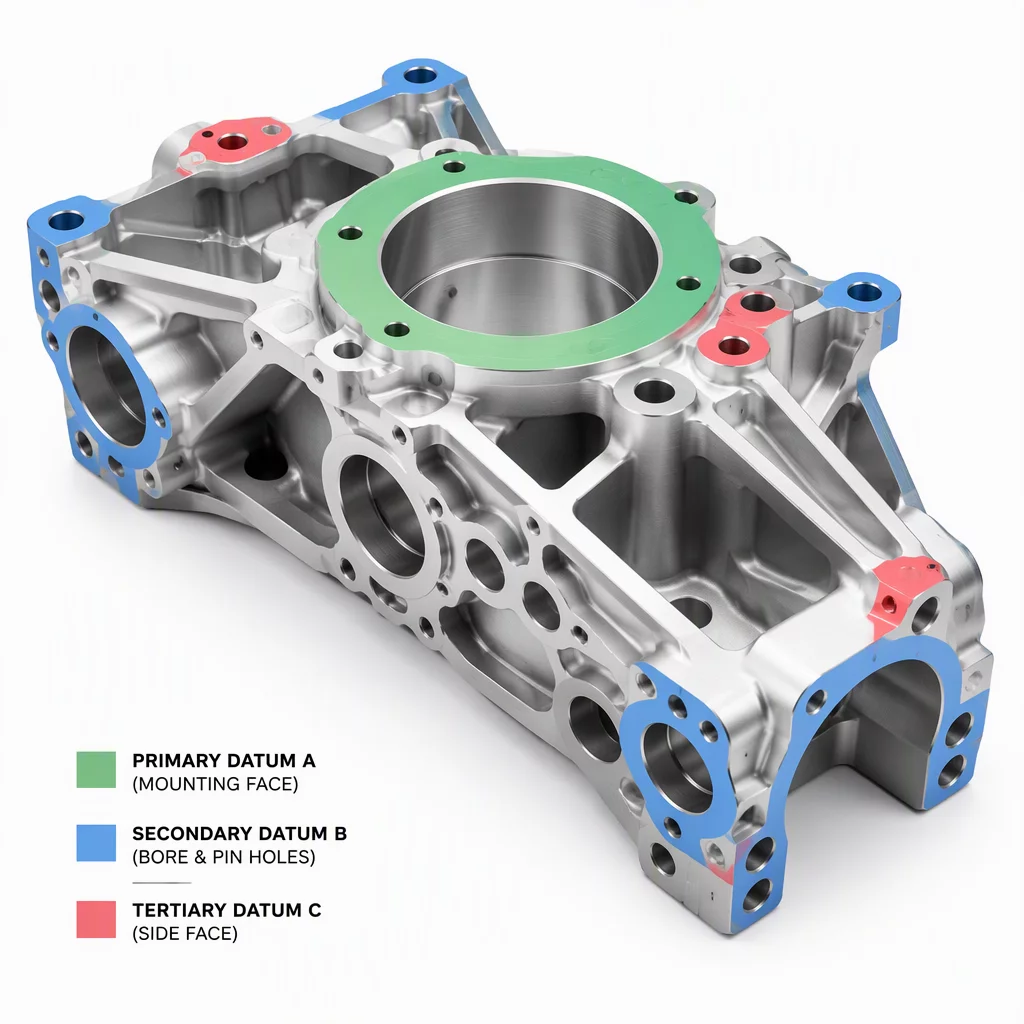
The primary reference holes receive spot drilling, drilling, and reaming operations while the blank retains its maximum geometric rigidity.
Deflection & Wander Defense
Machining holes into solid top surfaces guarantees uniform engagement resistance, keeping long carbine drills centered and true.
CAM Process Engineers
Programmers managing multi-sided parts in Mastercam 2026 where coordinate shifts in early operations ruin true position requirements.
Struggling with Coordinate Drift Across Setups?
Review your feature dependency tree with our team to decouple critical coordinate holes from aggressive stock clearing paths.
Preserving Coordinate Fidelity Through Strategic Sequence Mapping
Hole features frequently define the fundamental datum network for complex manufactured parts. Machining deep cavities or aggressive peripheral profiles prior to establishing locating holes relieves residual raw material tension unevenly, causing micro-distortions across the part envelope. A well-constructed sequence strategy ensures that precision dowel locations and threaded retention patterns are generated while the workpiece maintains maximum mass and baseline stability. In this workflow, Mastercam 2026 process maps bind early hole operations to primary solid geometry datums, isolating the coordinate origins from downstream elastic deformation.
Tool deflection represents another hazard solved by intelligent operation ordering. When a drill encounters an interrupted surface or an inclined pocket floor created by an earlier roughing pass, cutting lip forces become unbalanced immediately. The tool tip walks across the inclined stock boundary, causing positional error or drill fracture. Addressing coordinate holes before surrounding cavities eliminates interrupted entries completely. Engineers utilizing GPU accelerated simulation verify toolholder clearance against unfinished stock boundaries, ensuring high-speed drilling cycles complete without rapid clearance collisions.
Core Execution Rules for Reference Sequencing
- Establish primary fixture dowels and alignment bores in unmachined raw stock before roughing forces alter internal stress states.
- Spot drill and penetrate flat top surfaces prior to side contouring to preserve normal entry geometry for deep drill bits.
- Generate cross-hole intersections by completing the larger diameter passage first, mitigating burr formation and tool deflection.
- Validate clearance heights using GPU accelerated toolpath calculation routines before indexing rotational axes in multiaxis setups.
Engineering Sequencing Parameters
The table below presents validated ordering metrics for hole arrays governed by rigid datum dependencies.
| Parameter | Engineering Value | CAM Rule Context |
|---|---|---|
| Primary Datum Hole Timing | Setup 01 Op 02 | Executed immediately after stock face milling to anchor coordinate tracking. |
| Interrupted Surface Threshold | > 5 Degree Incline | Requires milling a flat spot landing or drilling prior to adjacent cavity removal. |
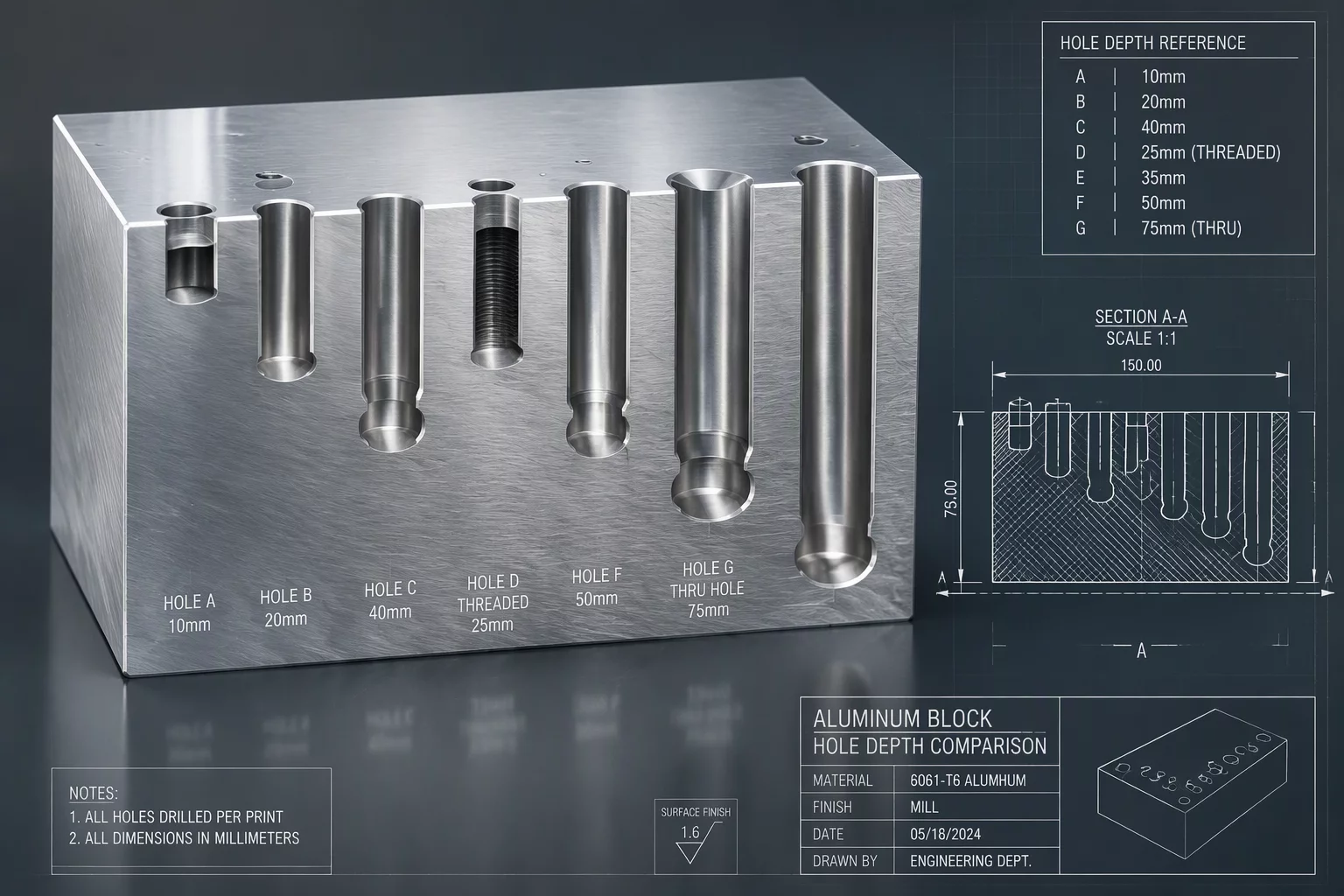
| Deep Hole Pecking Allocation | 3x to 5x Diameter | Maintains chip evacuation before cross-bores expose the drill flute to snagging. |
| Thread Tapping Placement | Final Operation in Group | Prevents heavy milling chips from packing internal threads during roughing cycles. |
Shop Floor Execution Checklist
Measure Initial Stock Distortion
Verify raw material squareness and surface parallelism using spindle probes before committing reference dowel holes. Any tilt on unmachined faces causes lateral drill displacement and angular error throughout deep holes.
Isolate Tapping Cycles From Heavy Coolant Wash
Schedule thread forming or tapping after surrounding pocket walls receive final contour passes. High-volume roughing wash carries abrasive chips into newly cut threads, risking tap breakage on subsequent parts.
Explore Associated Feature Order Maps